Frequently asked safari questions
- Everything you need to know before travelling — from the best time to visit and what to pack, to visas, vehicles and tipping.
1. What is the best time of year to go on safari?
East Africa offers rewarding wildlife experiences throughout the year. The best season depends on your chosen countries, landscapes and wildlife interests, and our team will recommend the strongest travel window for this particular journey.
2. What should I pack for a safari?
Pack lightweight, neutral-coloured clothing (khaki, beige, olive), a warm layer for early mornings and evenings, comfortable walking shoes, a hat, sunglasses, sunscreen, insect repellent, binoculars and a camera. Soft-sided duffel bags are recommended, especially if your itinerary includes light aircraft flights.
3. Do I need a visa or vaccinations?
Entry and health requirements vary by destination and nationality. We recommend checking the latest official guidance before travel and consulting your doctor about recommended vaccinations, yellow fever certification and malaria precautions.
4. Is a safari safe for children and families?
Yes. We regularly host families and tailor the pace, accommodation and activities to suit children of different ages. Private vehicles mean your schedule is flexible, and many of the camps we use offer family tents and child-friendly activities.
5. What vehicles do you use on safari?
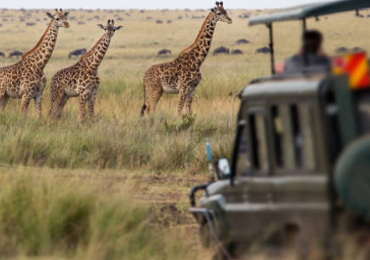
We use custom 4×4 Toyota Land Cruisers with pop-up roofs for game viewing, large windows, a fridge for cold drinks, charging sockets and radio communication. Every guest is guaranteed a window seat, and private safaris mean the vehicle is exclusively yours.
6. What is included in the safari price?
Our prices typically include private transport with a professional guide, accommodation as listed, meals on safari, park and conservation fees, scheduled activities, drinking water and airport transfers. International flights, visas, travel insurance, tips and personal expenses are excluded unless stated otherwise.
7. How much should I tip my guide and camp staff?
Tipping is at your discretion, but as a guideline we suggest USD 15–25 per guest per day for your safari guide and USD 5–10 per guest per day for camp staff, usually given at the end of your stay.
8. Can this itinerary be customised?
Absolutely. Every safari we run is private and tailor-made. We can adjust the number of days, upgrade or change accommodation, add a beach extension in Zanzibar, or combine parks to match your travel dates, budget and interests — just ask our team.
9. Are there any Medical Requirements to enter Tanzania?
It is very important to set an appointment with a travel doctor in your home country before you come. Depending on the situation, you might take vaccine for yellow fever. If you go to Zanzibar or come from (or transit in) an endemic yellow fever country, proof of vaccination against yellow fever may be required at the airport. Vaccinations are recommended for travelers going to Tanzania: yellow fever, hepatitis A and a combined tetanus, diphtheria and inactivated polio vaccine (Td/IPV). Proof of Yellow Fever vaccination is required if you are traveling to Tanzania from countries that have Yellow Fever Endemic or travelers who transit in Yellow Fever Endemic Areas, only if the transit period at the airport is 12 hours or more.
Check the CDC’s website for updated health information for travelers to Tanzania. http://wwwnc.cdc.gov/travel/destinations/traveler/none/tanzania
If you use prescription medication or if you suffer from a medical condition that requires special consideration, it is best to consult your physician and inform the aircraft company before flying. You may require a medication passport to show authorities abroad and flight attendants that you need certain medication. In the event that you lose your medication or require additional supplies abroad, the medication passport will allow you to refill your prescription. In addition, you will usually need a doctor’s certificate in the form of a Schengen medical certificate or a medical certificate written or translated into English. The same may apply to traveling with medical equipment. Enquiring about these things may take weeks, so it is best to start well in advance.
10. What about Malaria?
There is no vaccine available against malaria. We recommend the use of anti-malarial medication, but again, it is best to take this up with a travel medical specialist. Malaria is an infectious disease that is caused by a parasite. You get it from the bite of a mosquito that carries the parasite. These parasites multiply first in the liver cells and then in the red cells of the blood. The symptoms include shaking chills, followed by fever, usually preceded by flu-like illness. To protect yourself against mosquito bites, you can spray yourself with insect repellent containing DEET and make sure to cover your body properly if you are outside after sunset.
11. Do I need travel Insurance?
Travel insurance is the traveler’s own responsibility. We recommend that you take out travel insurance in your home country that will cover, for instance, loss, damage or theft of luggage, money and other valuables, medical expenses, repatriation expenses, etc. Consider also any additional cover you may need, such as for extreme, specialist or high-risk sports (scuba diving, canoeing, mountain biking, etc.). Mountain climbing requires a separate mountaineering insurance policy. Travel with Us accepts no liability whatsoever in connection with any such activities.
12. What is Tanzania's Climate?
Situated in the eastern part of the African continent, bordering on the Indian Ocean, Tanzania enjoys mostly warm weather all year round. The climate varies considerably in this large country, but a tropical wet and dry climate, or tropical savanna climate, predominates. The eastern portion of Tanzania has more periods of rainfall and droughts, while Central Tanzania is predominantly very dry. The main rainy season or ‘long rains’ in Tanzania lasts from March until the end of May. This is the time when everything turns vibrant green – a great time to see wildlife! Then, between June and August, it is drier and cooler in Tanzania. The beginning of October marks the start of the period of ‘short rains’ during the daytime, with warm summer temperatures. January, February and March are the driest summer months of the year. As your tour will take you to various altitudes, ranging from mountainous regions to lower coastal areas, temperatures will differ. In view of the different seasons and the fact that it can get a little chilly at night, it is advisable to pack clothes that you can layer easily.
13. What is Tanzania's Currency?
The local currency is the Tanzania Shilling (TZS). In hotels and restaurants, bills can normally be paid in USD, but in local shops and markets, you will need TZS which is available at most banks and bureaus in major towns. ATMs are available in Dar es Salaam and Arusha, and most major towns, but once you are out on safari (in the bush), you will not have access to either banks or ATMs, so exchange sufficient funds beforehand. Credit cards are normally accepted in the bigger hotels and restaurants, but in the smaller lodges or hotels, there is often no access.
14. How Do I dress?
In honor of their religious beliefs and culture, Tanzanian people always dress modestly. In the privacy of your accommodations or at the beach, you do not need to concern yourself with any dress code, but if you mix with the local population, it is appropriate to wear clothes that cover the body, especially shoulders and legs. This is a simple courtesy that shows respect for the local population.
15. What is not included in the Tours?
We do not include the country visas, and items of personal interest like souvenirs or extra services/tours not agreed beforehand. Tips for your guide and lodges are not included. Also, if after you book your tour, the government decides to apply increases in park fees, camping fees, concession fees or others, these shall be added to your contract as well.
Safari stories, new itineraries and travel inspiration — straight to your inbox. Explore expert-written articles on Tanzania’s parks, the Great Migration, Kilimanjaro and Zanzibar — practical advice and field knowledge from the Williamson Adventures team. For more than a decade we have refined the art of the curated safari. We do not just show you East Africa; we invite you into its hidden rhythms through unrivalled access and quiet, thoughtful luxury. Our designers and guides live in Arusha. The routes we suggest are the ones we drive ourselves, in the seasons we know they work. A Tanzanian team on the ground for the whole journey, reachable at any hour, with vehicles and flights we control. Guides who grew up on these plains, camp teams who remember how you take your coffee by the second morning. Every journey supports conservation, schooling and water projects in the communities our team calls home.