Altitude-Sickness
- Altitude sickness is something that too few people consider when taking on a climbing expedition. Whether you are a first time climber or a seasoned veteran, it can never be too soon to consider the risks and effects of altitude sickness and think about how to prepare for it should it hit you.
It is quite common for people to think that extra weight around the middle or a general lack of peak fitness are the root causes behind altitude sickness, but in truth that is just not the case.
Is Altitude Sickness Random & Unpredictable?
Research on the Internet may indicate that altitude sickness is caused randomly and is unrelated to a person’s age or level of aerobic fitness. You may also see information that acute altitude sickness comes on all of a sudden at specific altitude levels. Whilst weight can be a factor, how one person’s body is affected is not predictable with any accuracy and there is little causation that one can point to.
However, this sort of information is only useful when taken in context. The tests for altitude sickness for research purposes are typically performed by taking someone from sea level up to an elevation of several thousand meters quickly, and then seeing the effects. Much like with surfacing too quickly when scuba diving, it is not always the depth or elevation involved, but the speed with which you move upwards that matters.
As a side issue to be aware of, somebody who suffers from a respiratory disease like asthma is much more likely to experience breathing difficulties at higher elevations, if not altitude sickness specifically.
How Do You Avoid Altitude Sickness Ruining Your Trip?
The most important thing to do is to arrive ahead of your planned climbing trip and give your body time to adjust as gradually as possible to the level of elevation. This cuts down the risk of experiencing a bout of altitude sickness and the unpleasant symptoms that can occur from it. Given time, the body can adjust partially or completely to the changes in altitude, but when deprived of the time to adjust, the human body has the hardest time coping.
So for those travelers that are genuinely concerned about it, we would suggest planning for a longer trip, adding in time to adjust to the elevation initially, and perhaps selecting a climbing route or climbing course that takes a more leisurely pace.
Altitude Sickness affects 25% to 85% of travelers visiting high elevations (above 8,200 feet or 2,500 meters), depending on how fast they ascend and their individual vulnerability. Flying vs. Hiking: Flying directly into a high-altitude city or resort (like Lhasa, Cusco, or a Colorado ski area) carries a much higher risk of Acute Mountain Sickness (AMS) than walking, hiking, or driving up gradually. Prevalence Rates: Up to 50% of travelers to the Himalayas and nearly 85% of those who fly straight into the Mount Everest region report symptoms of AMS. In Lhasa, Tibet (3,658 meters), roughly 36.7% of visitors experience it. ,Fitness Does Not Matter: Age, sex, and physical fitness level do not protect you from altitude sickness. Even elite athletes can fall victim if they ascend too quickly.
The Oxygen Illusion: The percentage of oxygen in the air remains steady at 21% even at high altitudes, but the air pressure drops, meaning every breath you take delivers fewer oxygen molecules to your bloodstream (hypobaric hypoxia). Sleep Apnea at Night: Many tourists experience "periodic breathing" (a form of high-altitude sleep apnea) where they suddenly wake up gasping for air because the brain's breathing control center is adjusting to low oxygen levels. , Severe Complications: While mild AMS feels like a bad hangover (headache, fatigue, nausea), it can occasionally escalate into life-threatening conditions like High-Altitude Pulmonary Edema (HAPE—fluid in the lungs) or High-Altitude Cerebral Edema (HACE—swelling of the brain)
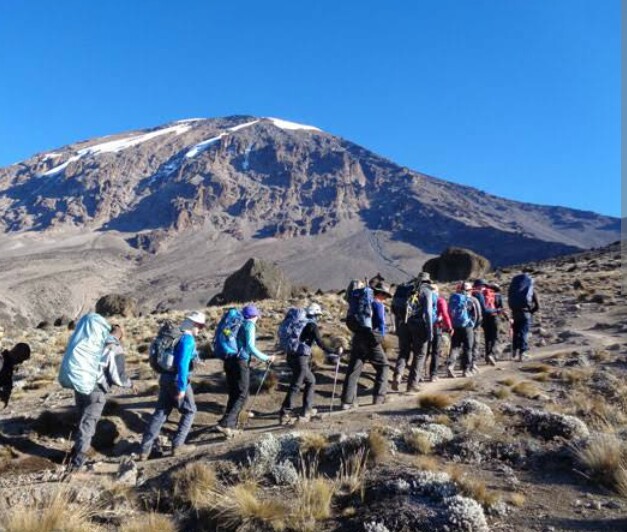
Explore remarkable landscapes across Tanzania and Kenya, chosen for meaningful wildlife encounters and journeys shaped around you. Multi-generational journeys crafted for wonder, safety and shared discovery. Private moments in the wild — sundowners for two, candlelit dinners and Zanzibar's shores. End your safari on white-sand beaches, in historic Stone Town lanes, and over turquoise waters — pure island unwind after the wild. Climb Africa's highest peak with experienced local guides, measured pacing, and private camps that keep you strong for the summit.
Climb High, Sleep Low: Ascend no more than 1,640 feet (500 meters) per day once you pass 8,000 feet, and take a rest day every 3 to 4 days. , Acclimatization Stops: Spend at least 2 to 3 days at an intermediate altitude before pushing higher. , Medication Options: Doctors sometimes prescribe acetazolamide (Diamox) to help the body acclimatize faster. ,Golden Rule: If symptoms do not improve or worsen after 24 hours, descend immediately by at least 500 meters.